This is the first issue of what we’re planning to make a monthly PDX Hackerspace update: what happened around the space, what people are building, what’s coming up, and where more hands would be useful. August gave us plenty to start with.
$96,000 Creative Heights Grant
The Oregon Community Foundation has awarded a $96,000 Creative Heights grant to The Haptic Petting Zoo, a project led by artist and design engineer Dillon Simeone, with PDX Hackerspace as fiscal sponsor. It’s one of the projects in OCF’s $1 million 2026 Creative Heights round.
Dillon’s work explores ways of translating information across senses: sound you can feel through haptics, sound you can see through light, wearable interfaces, movement, physical feedback, and other ways of making information tangible.
The Haptic Petting Zoo grows out of that work. Earlier iterations have included vibrating benches, GELU wearable bracers, haptic vests, tactile transducers, and other experiments in turning sound and information into physical and multisensory experiences.
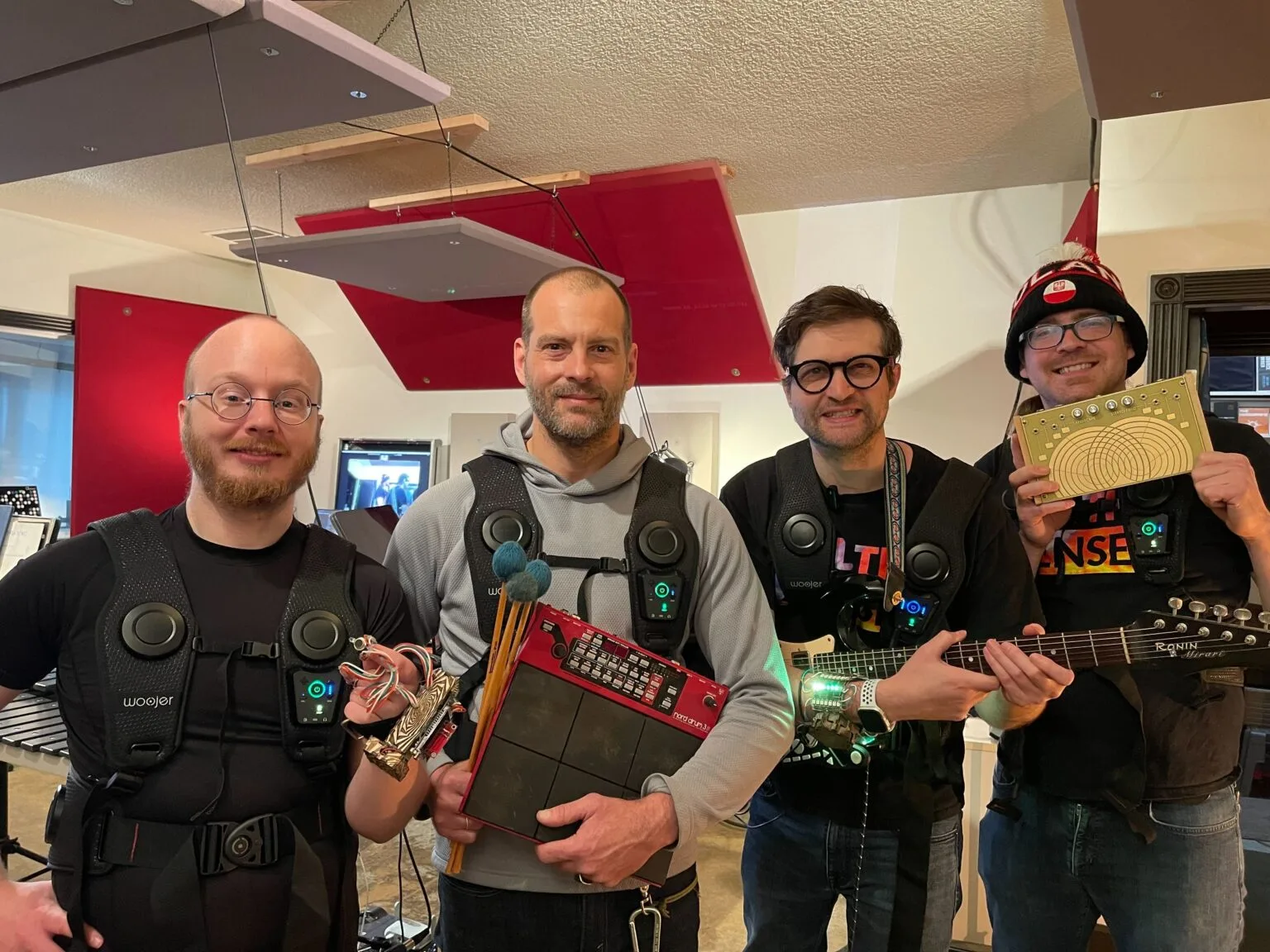
With support from Creative Heights, the Haptic Petting Zoo is expanding into a 10+ station interactive touring exhibition. Dillon’s press kit has the full announcement, the build tracks, and the technical background.
It isn’t one sculpture or one machine. It’s a collection of interactive works exploring different ways people can experience and interact with information through touch, sound, light, motion, temperature, pressure, and other sensory channels.
Some are sculptural. Some move. Some vibrate. Some of Dillon’s work is wearable. Some translates sound into light. The common thread is experimentation with perception, accessibility, and interfaces that go well beyond the usual screen, speaker, keyboard, and mouse.
That’s a pretty natural fit for a hackerspace.
Development and fabrication will take place collaboratively at PDX Hackerspace, with the exhibition eventually heading out on a two-year regional tour.
We’ll have considerably more to share as the individual projects develop.
We Have a Hacker Bus
August also brought a somewhat harder-to-miss project to the space: a 2000 Ford Econoline short bus.
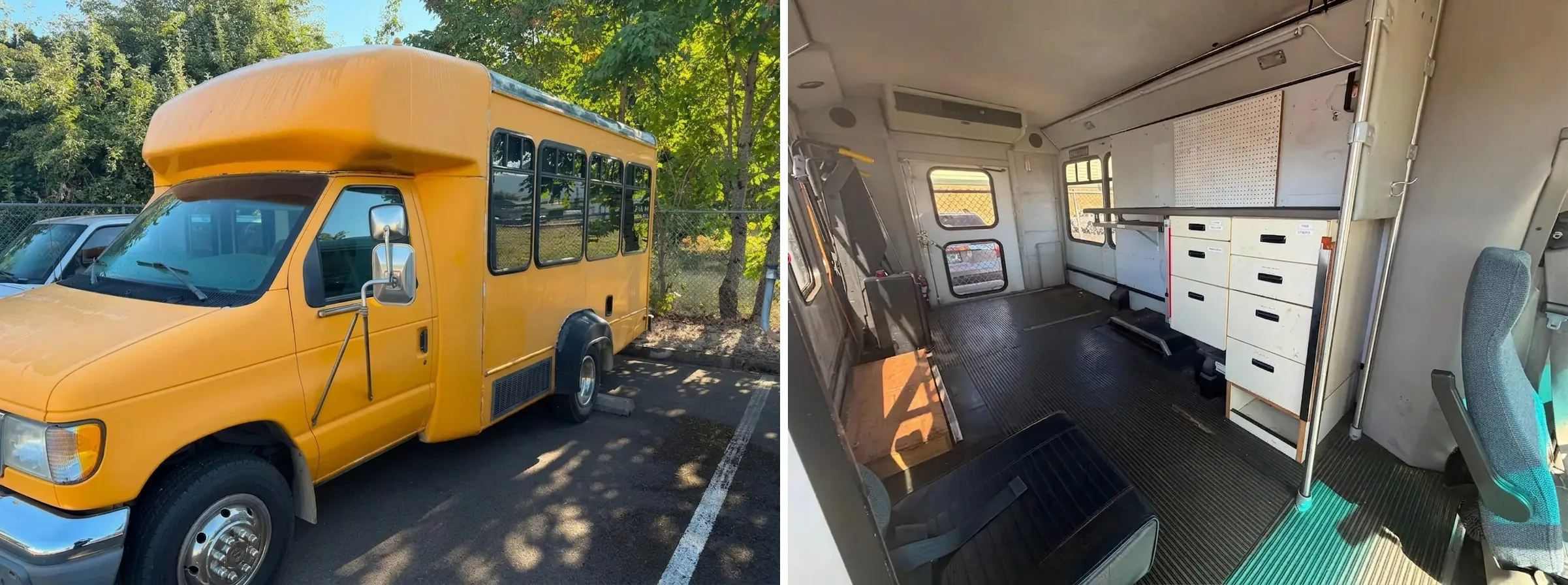
We don’t have a proper name for it yet, and we haven’t decided exactly what it’s going to become. That’s intentional.
Right now we’re stripping out what we don’t need, sorting out the basic infrastructure, figuring out the interior, and discussing what actually makes sense to do with a mobile hackerspace platform before committing to a design.
There are plenty of ideas. Some will survive contact with reality.
What we do know is that it’s going to be a community build. There’s already mechanical work, electrical work, fabrication, CAD, software, design, documentation, and a large amount of general problem solving involved.
If you’ve been looking for an impractically large project to contribute to, we’ve solved that problem for you.
Also: the bus needs a name. Send us one, or bring it to a Saturday work party.
September at PDX Hackerspace
| Date | Event | Time |
|---|---|---|
| Wednesdays | Exploit Workshop | 6:30–10:30 PM |
| September 5, 12 & 19 | Work Party + Open House | Noon–5 PM |
| September 6 | Portland Area Robotics Society | 10:30 AM–12:30 PM |
| September 9 | Hack Lunch | Noon–2 PM |
| September 12 | Biohacking Workshop: “Hello World” | 9 AM |
| September 12 | PDX Hackerspace Board Meeting | 1–2 PM, members only |
| September 14 | DorkbotPDX | 6:30–9:30 PM |
| September 19 | Locksport Meetup | 2–5 PM |
| September 26 | Members-Only Work Party | Noon–5 PM, no public Open House |
Events change and new ones get added. Full calendar: events.pdxhackerspace.org
Hack the Hackerspace
PDX Hackerspace is itself one of the larger projects at PDX Hackerspace.
There is always infrastructure to improve, documentation to write, benches to organize, software to fix, fixtures to build, things to repair, projects that stalled halfway through, and old decisions that could benefit from somebody looking at them again.
You don’t need to wait for somebody to assign you a task.
If you see something that could be improved, talk to the people who use it, figure out what needs to happen, and help make it happen. Saturday work parties are a particularly good place to start. If you’d rather bring materials than hours, what we need is kept current.
See You in September
The hackerspace works because people show up.
They bring projects. They teach each other things. They fix broken infrastructure. They organize events. They donate equipment. They clean up messes they didn’t make. They build things nobody had a particularly good reason to build in the first place.
August brought a major grant, a very large new project parked outside, and plenty of work inside the building.
September should be interesting.